MOScholars in Plain English: What Missouri's Scholarship Account Means for Homeschool Families
By My Learning Source · November 2, 2026 · Scholarships, Guides
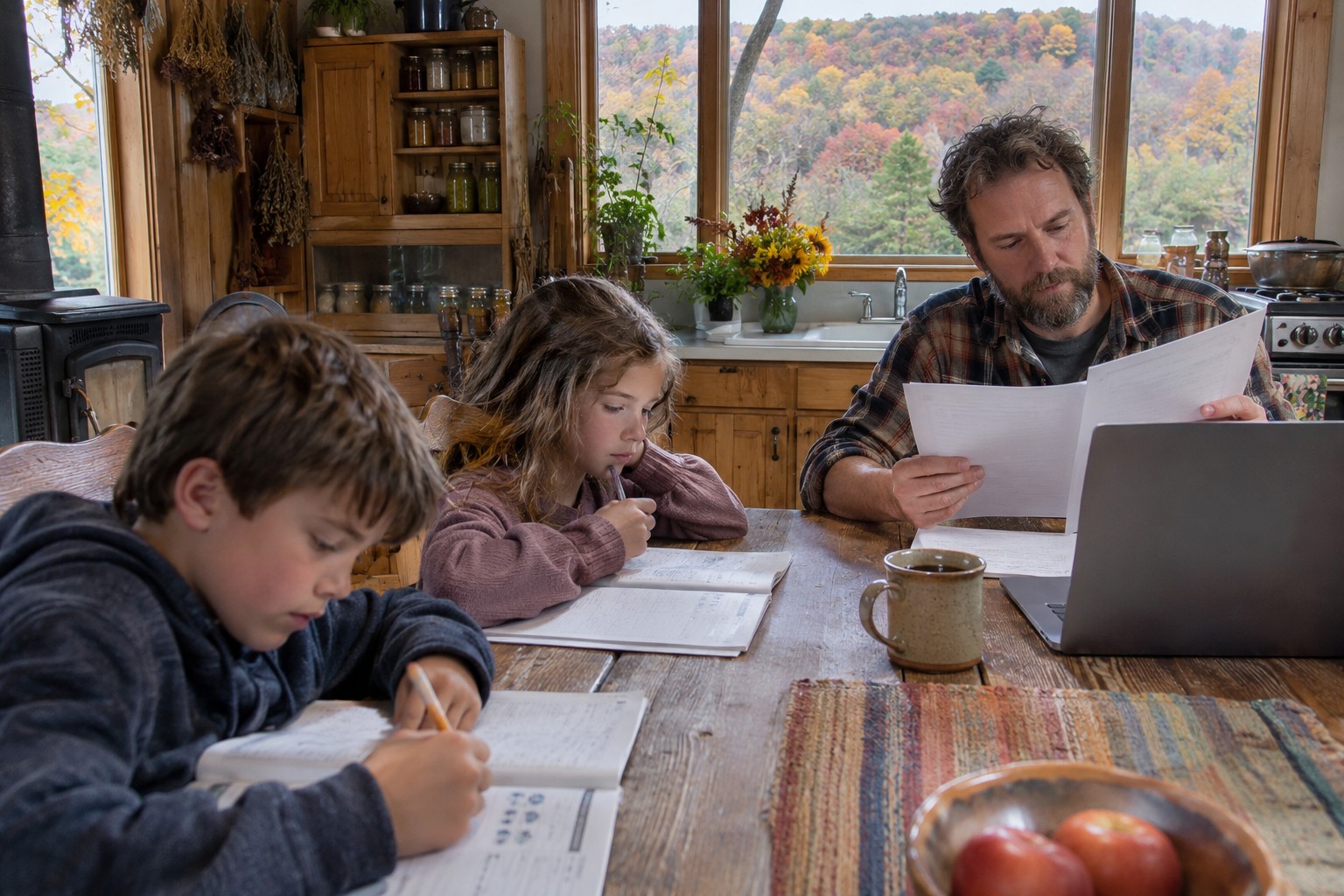
Somebody at co-op told you Missouri has "homeschool money" now. That's not quite right, and it's worth getting straight before you spend an evening on applications. Missouri's scholarship account program, MOScholars, can help some home-educating families. But it doesn't pay a traditional home school, it has strict eligibility rules, and it runs through private nonprofits rather than a state office you call. Here's the whole thing in plain English, as of October 30, 2026. Our Missouri homeschool options guide keeps the official links in one place.
What MOScholars is
MOScholars is the short name for the Missouri Empowerment Scholarship Accounts Program. The General Assembly created it in 2021 (HB 349 and SB 86), and the State Treasurer's office oversees it. The law is in RSMo 135.712 to 135.719 and 166.700 to 166.720.
The money doesn't come out of your school district's budget. Donors give to nonprofit Educational Assistance Organizations (EAOs) and get a Missouri tax credit for it. The EAOs put grants into scholarship accounts for qualified students. The Treasurer's MOScholars FAQ says the program "does not reduce the funding received by a student's resident school district."
You don't get a check. The account pays approved schools, providers and vendors for approved expenses, and the parent signs a written agreement with the EAO that spells out the rules.
Who it's for
The law, RSMo 166.700, has two ways in. A Missouri resident student qualifies with an IEP developed under the federal Individuals with Disabilities Education Act. Or the student lives in a household with income no higher than 300% of the free and reduced-price lunch standard and also meets one of three tests: attended public school full time for at least one semester in the previous 12 months, is eligible to start kindergarten or first grade, or is the sibling of a student who got a scholarship last year and will get one this year.
Read that second route again. A child who has been homeschooled for years, with no IEP, usually doesn't fit any of those three tests. That's why most families who already homeschool won't qualify. We cover every piece of eligibility in a separate article.
The homeschool catch: FPE schools
Under RSMo 167.012, a Missouri "home school" by definition does not enroll children who take part in MOScholars. So a traditional home school can't use an account.
Since 2024, the law has also defined a "Family Paced Education" or FPE school in RSMo 167.013. It's home-based and follows the same rules as a home school: private or religious-based instruction, no more than four unrelated children, no tuition, at least 1,000 hours of instruction and the same records. The difference is that an FPE school may enroll MOScholars students. A homeschooling family whose eligible child gets an account is running an FPE school.
The Treasurer's Schools page lists what an FPE school agrees to when it applies: not to pay, share, refund or rebate account money to the parent, the student or anyone related within three degrees, and to produce the records 167.013 requires when asked.
How much, and what for
Award limits are a percentage of the State Adequacy Target, a per-student figure DESE calculates each year (RSMo 135.714): up to 175% for a student with an IEP, 160% for an English learner, 125% for a student eligible for free or reduced-price lunch and 100% for everyone else. Those are ceilings. Actual awards depend on what each EAO has raised.
The account can pay for tuition at a qualified school, curriculum, tutoring, educational therapies from licensed or accredited providers, certain tests, approved devices, and summer and after-school programs, among other things. It can't pay for consumable supplies like paper and pencils, and it can't pay anyone related to the student within the third degree. For an FPE family, that includes Mom and Dad.
The 2026–27 numbers
The Treasurer's October 12, 2026 release reported these figures for the 2026–27 school year:
- 16,144 applications received
- 12,319 students qualified
- 10,235 students funded, with $68.7 million awarded
- 1,735 students on the waitlist
- 385 approved schools and 350 family paced education participating statewide
Qualifying didn't guarantee money. Not every qualified student was funded at the time of that release. EAOs fund students in a priority order set by law, with returning students first.
Is it on solid legal ground?
On April 14, 2026, the Treasurer announced that the Cole County Circuit Court had dismissed with prejudice a lawsuit by the Missouri National Education Association that sought to halt scholarship distributions (Treasurer's release). The program went on to fund the 2026–27 school year. We haven't confirmed whether that ruling was appealed, so keep an eye on the Treasurer's newsroom.
What MOScholars isn't
- It isn't a homeschool tax credit. We found no Missouri income tax credit or deduction for home school expenses.
- It isn't run by DESE. DESE's FAQ says it doesn't regulate or monitor home schooling and doesn't provide funding for it.
- It isn't open to anyone who asks. Eligibility, the priority order and each EAO's funding decide who gets an account.
- It isn't required. Most Missouri homeschool families never touch it and teach legally under 167.012 with no paperwork filed anywhere.
One family's decision
The Harlands live near Republic. Their oldest two have been home since kindergarten. Their third, a fourth grader, finished last fall semester at their public elementary school before they pulled him out in January. At a park day, another mom mentioned MOScholars, and Dad spent a night reading the Treasurer's pages. What he found: the older two don't qualify, since neither has an IEP or a recent public school semester. The fourth grader might, because he spent a full semester in public school within the past 12 months, if their income is under the limit. If he gets an account, their home school would operate as an FPE school, and they'd agree never to pay themselves or relatives from it. They decided to check their income against the limit first, then call an EAO that works with FPE students before the next window opens.
(A composite example — names and details are illustrative, drawn from situations homeschool families commonly describe.)
Before you go further: a checklist
- Check whether your child has an IEP developed under IDEA and dated within the last 36 months.
- If not, check your household income against 300% of the free and reduced-price lunch standard, then the three extra tests.
- Read the FPE definition in RSMo 167.013 and decide whether you're comfortable signing the agreement.
- Look at the Treasurer's EAO list and ask which ones work with FPE students.
- Sign up for application updates on the Treasurer's MOScholars page. No 2027–28 window had been announced as of October 30, 2026.
- Find tutors, therapists and curriculum sellers in our vendor directory, and watch dates on our education calendar.
My Learning Source is an independent marketplace and is not affiliated with the Missouri State Treasurer's Office, any Educational Assistance Organization, the Missouri Department of Elementary and Secondary Education or any Missouri school district. Program rules and dates change — confirm details with the Treasurer's office and your EAO before you act. Family examples are composites, not real individuals.